Terracotta, painted
2600 - 1900 BCE
North India
CSMVS
Details
Culture/Civilisation
Harappan Civilisation
Theme
Agriculture and Surplus
Subtheme
Surplus and the Road to City-States
Display Location
Rotunda
Findspot
Mohenjo-daro
Measurements
L. 35 W. 26
Accession Number
IV 1639
Description
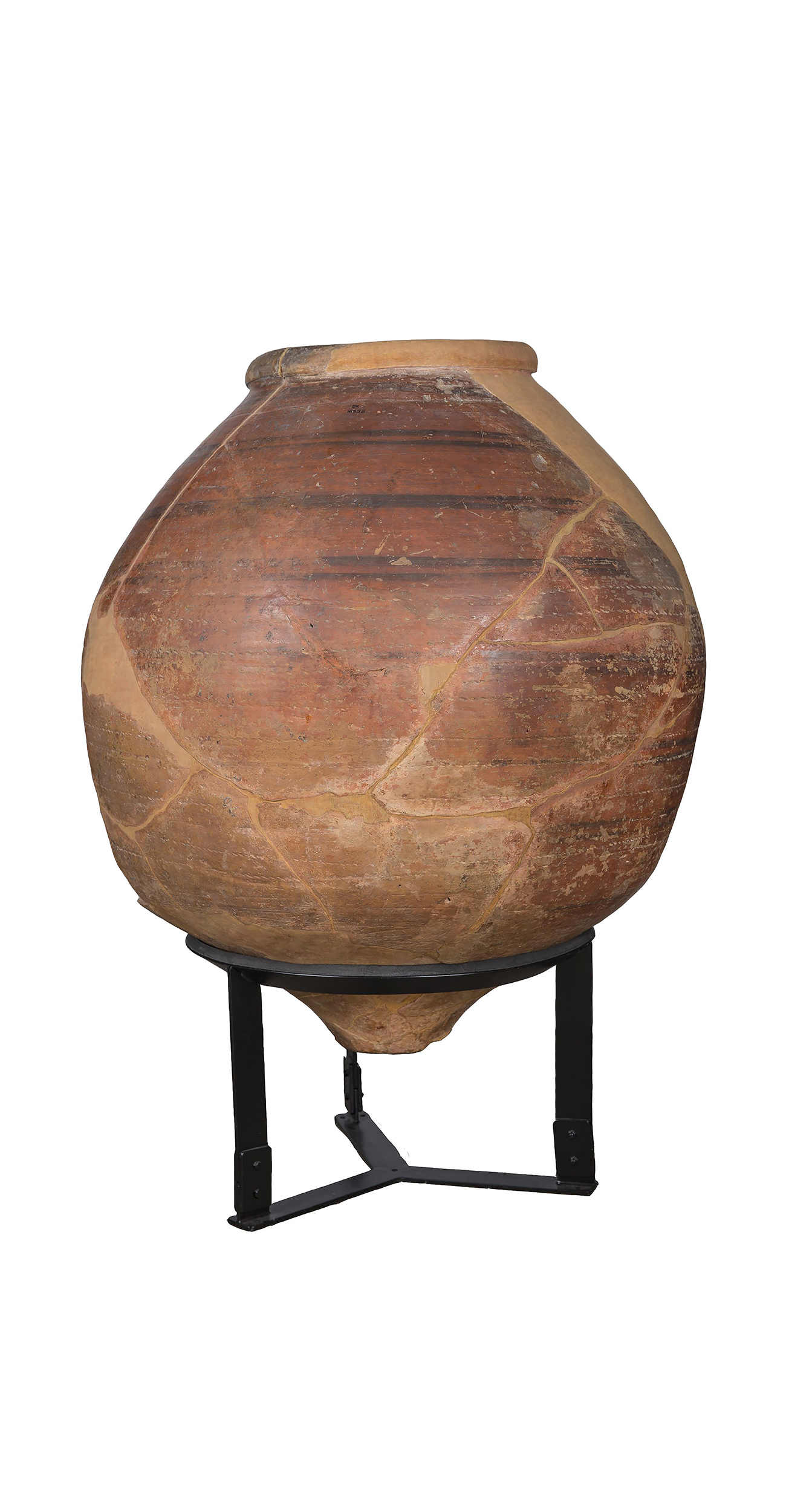
Wide-mouthed, large jars such as this one were used for storing grains, water, oil, and wine. How much (volume) could this jar hold 300 litres of liquid or 240 kgs of grain. The minimal decoration on this pot is typical of Harappan pottery of this time. Many would have been stored in granaries to supply in times of drought.
Across cultures, people crafted a wide range of clay vessels to store crops, and protect it from weather and pests. Other pots were also made for cooking. In every culture, decoration and pattern turned these utilitarian vessels into objects of beauty. Many of the shapes remain strikingly unchanged to this day.
Such clay vessels (displayed in this exhibition) found in regions spanning from Japan to Iraq, extending to northern Africa—represent approximately 5,000 years of pottery. They showcase human ingenuity in decorating simple utilitarian objects, as well as the enduring need to create art and impart symbolic meaning to everyday objects.