Stone
700-900 CE
Nalanda, BIhar
Bihar Museum, Patna
Details
Culture/Civilisation
Ancient India, Pala Dynasty
Theme
Two Great Centres of Learning
Subtheme
Nalanda Mahavihara – India’s Renowned Residential University
Case Title
Alexandria and Nalanda
Display Location
Coomaraswamy Hall
Findspot
Nalanda
Measurements
71.1 cm
Accession Number
Arch 1631

Description
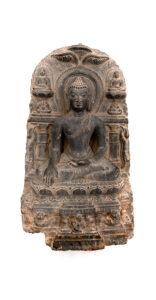
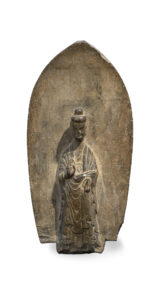
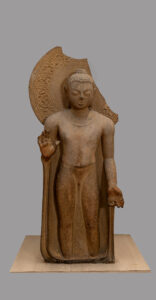
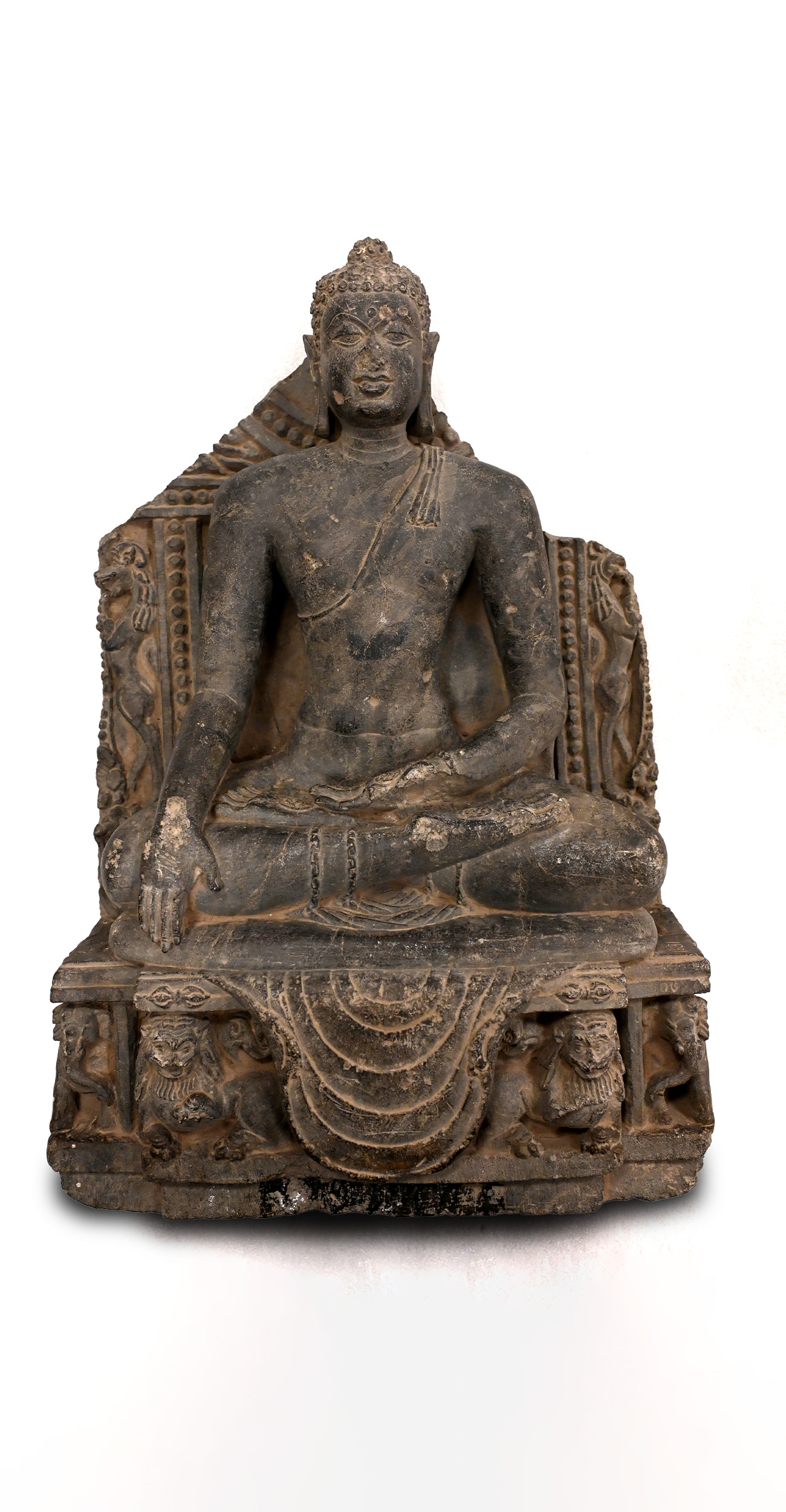
This statue from Nalanda depict the Buddha in the bhumisparsha mudra — the earth-touching gesture — symbolising the moment he called upon the Earth to witness his Enlightenment. Crafted from richly decorated black stone, the sculptures feature stylised lions, representing the Buddha’s wisdom and his fearless authority to spread the Dharma. One statue is crowned with a parasol (chatra), a symbol of royalty, spiritual protection, and reverence. These images exemplify the artistic idiom of the Pala dynasty (8th-12th century CE).
The moment of Enlightenment, marking the beginning of the Buddha’s teachings, is a central theme and a fitting icon for Nalanda’s Mahavihara (Great Monastery). Such sculptures were placed in niches within brick walls, serving as focal points for meditation — a key element of monastic training.
The Pala rulers of eastern India played a crucial role in preserving Buddhist texts and promoting the creation of illustrated manuscripts. Their patronage significantly contributed to the spread of Buddhism to Tibet and Southeast Asia.