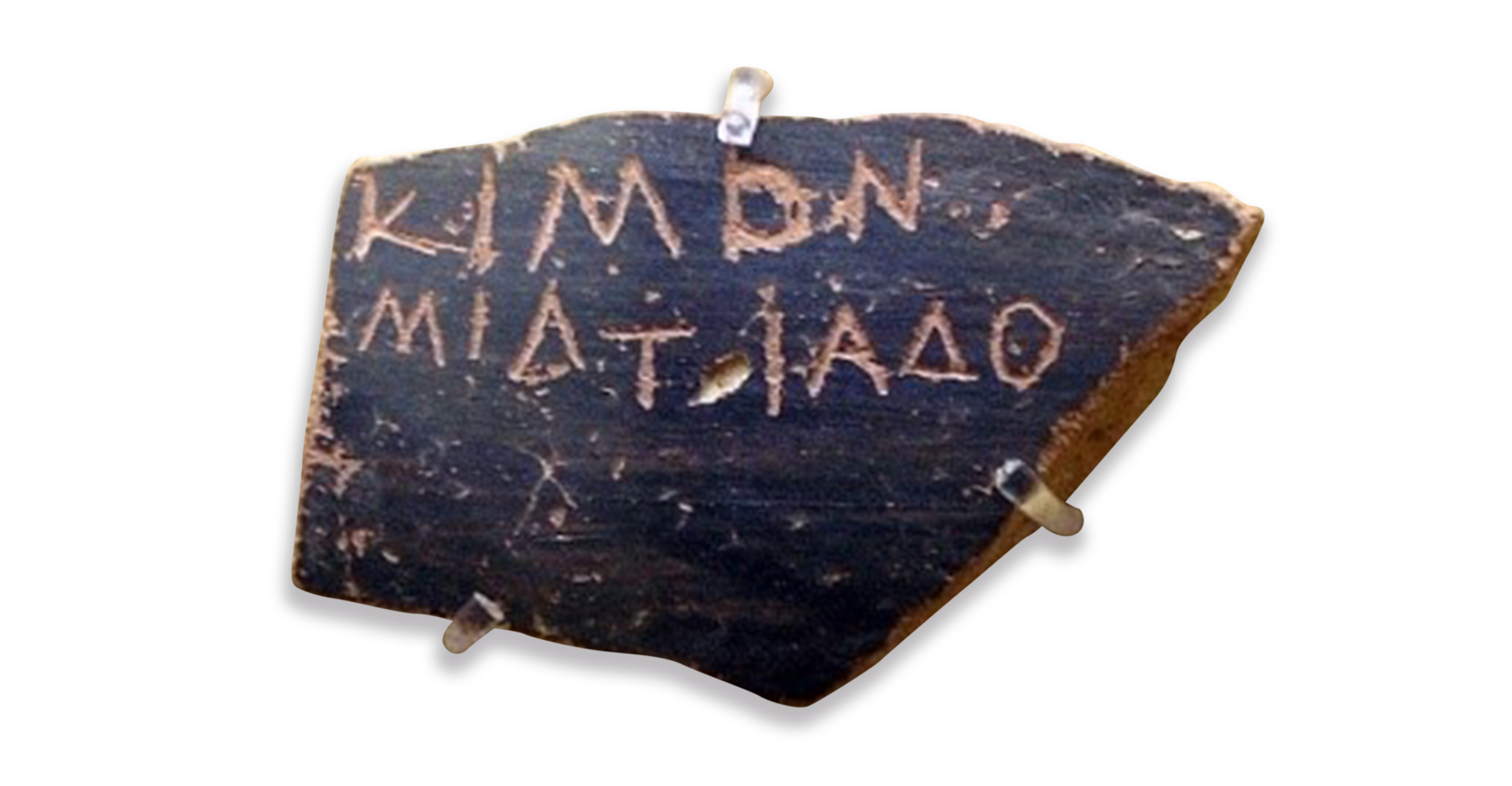
Kimon, son of Miltiades
Controlling the Powerful
Clay; fired
around 480 BCE
Greece
Ministry of Culture, Greece Museum Kerameikos
Details
Culture/Civilisation
Greek civilisation
Theme
Later Civilisations of Land and Sea
Subtheme
The Mediterranean
Case Title
The Mediterranean World
Display Location
Coomaraswamy Hall
Findspot
Athens, Greece
Accession Number
O 6719
Description
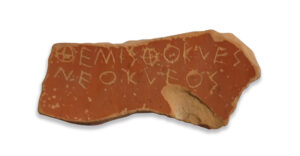
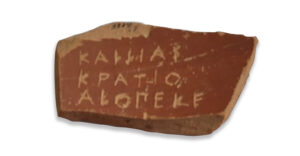
Ostrokon (ostraca or ostraka) naming Kimon, son of Miltiades
Bits of broken pottery (ostraka) tell us about democracy in Athens. They are ‘ballot papers.’ Scratched on them are the names of leaders whom citizens wanted to banish temporarily (ostracise) because they had become too powerful. All free male citizens (but not women, foreigners, or the enslaved) could vote.
Curators Comments
An ostracon is a broken piece of pottery used for writing, primarily for drafts or scribbles, since paper was only invented many centuries later. In Athens, an ostracon was used to inscribe the name of a prominent political figure as part of a vote for his exile—ostracism—from society. The practice of ostracism (ostrakismos) was used in Athens to apparently ensure that no prominent man would become a tyrant (an absolute authority) and misuse power. If 6,000 votes were cast, the person would be ostracised—banished from Athens.
It is worth noting that this form of “democratic decision-making” was limited exclusively to adult male citizens.