Limestone
500–530 CE
Museum Rietberg
Details
Culture/Civilisation
Ancient China
Theme
Trade, Movement and Exchange
Subtheme
Proliferation and Assimilation of Faith
Case Title
Faith follows trade: Buddha travels the world
Display Location
Coomaraswamy Hall
Findspot
China
Measurements
137 x 71 x 26 cm
Accession Number
RCH 106

Description
Buddhism reached China during the Han dynasty (206 BCE – 220 CE) along the Silk Roads. Over the following centuries, and especially under the Northern Wei dynasty (386–535 CE), it came to be widely practised in Chinese society, assimilating beliefs and rituals from Daoism and Confucianism.
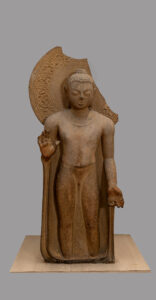
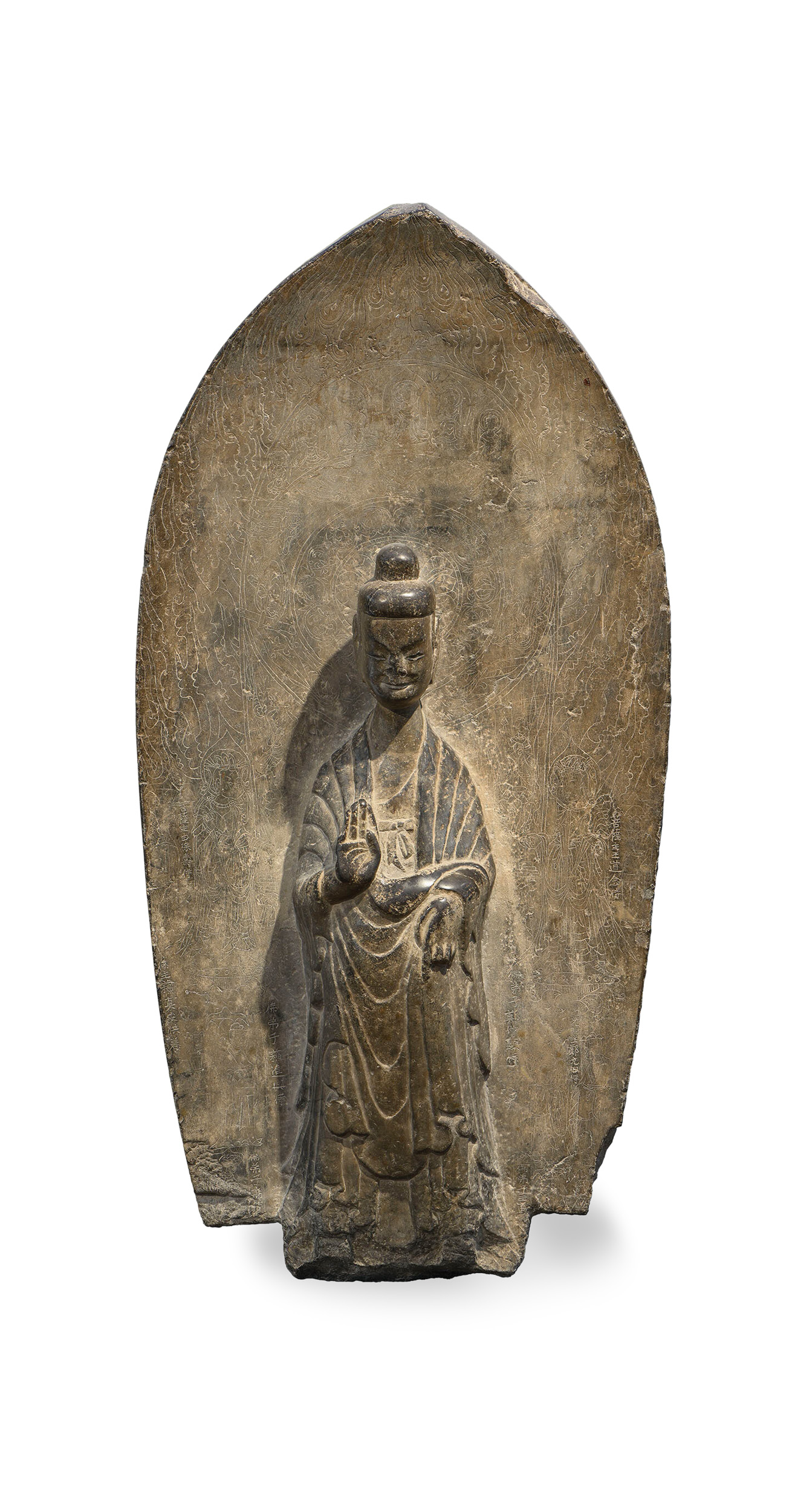
A very Chinese-looking Buddha here wears a typical bulky and pleated Chinese robe. His hands are in the gestures of abhaya (reassurance) and varada (granting a boon). Clouds of figures and symbols are exquisitely etched into the large pointed halo, extended to frame the Buddha.
Northern Wei rulers were generous patrons of Buddhism, using it to win a wider allegiance across a multi-ethnic society.