‘Standard of Ur’ (replica)
bitumen; inlaid, lapis lazuli, limestone, shell, Shell, Limestone (red), Lapis Lazuli, Bitumen, Wood
Early Dynastic III, 2500 BCE
Iraq
The British Museum
Details
Culture/Civilisation
Ancient Mesopotamia
Theme
The Great River Civilisations outside India: Mesopotamia, Egypt and China
Subtheme
Mesopotamia – The Land of the Two Rivers
Case Title
Standard of Ur
Display Location
Coomaraswamy Hall
Findspot
Royal Tombs of Ur, Iraq
Measurements
23 x 50 x 13 cm
Accession Number
121201
Description
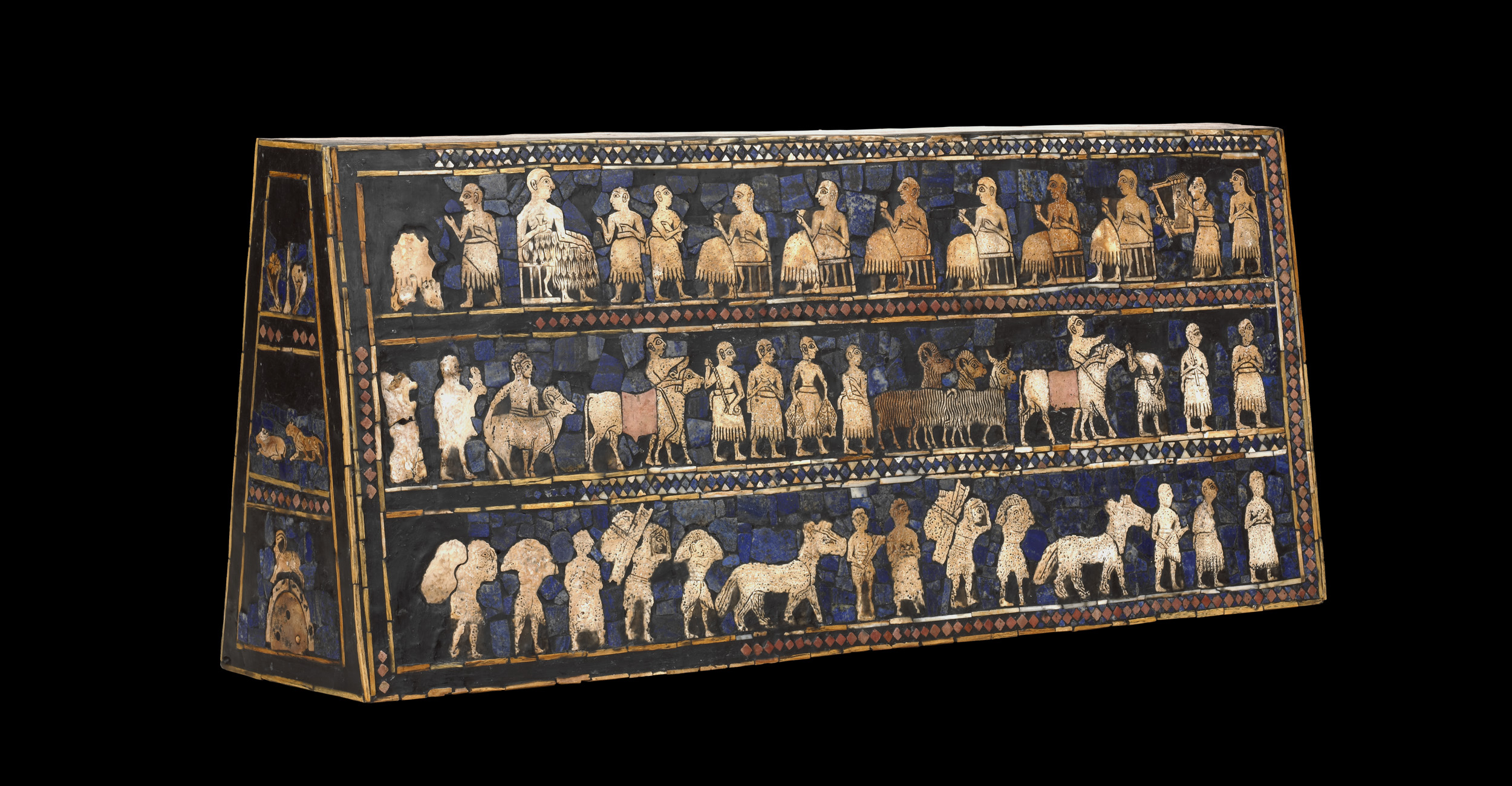
This magnificent box is a picture, a poem – and a unique document of how the city-state of Ur, rich through agriculture, trade, and conflict, understood itself. Its purpose is unknown, but the two sides show how Ur worked in Peace and in War.
Ur wins the war
Is this the first war film? A vivid view of warfare in early Mesopotamian society unfolds. Starting bottom left, soldiers ride war chariots, drawn by wild donkeys trampling their enemies. Captives are then bound and dragged, naked and humiliated, before the king. He stands in the middle of the top register, tall and victorious, surrounded by his officials.
Conquest was a major source of wealth for cities like Ur. Kingship was sacred, combining military, administrative, and religious duties, with the king acting as divinely appointed guardian of the land.
The other side of this box shows Ur at peace.
Ur flourishes in peace
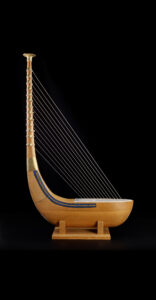
In ‘Peace’, the king presides over a ceremonial banquet. From bottom left – reflecting the social hierarchy – farmers bring grain, goats, sheep, and cattle up to the king. Larger than his courtiers, servants, and a musician, he holds what was probably a flowering date branch. With the help of the gods, he will ensure the fertility of land and flocks.
The exotic lapis lazuli, red limestone, and shell came from Ur’s extensive trading networks.