
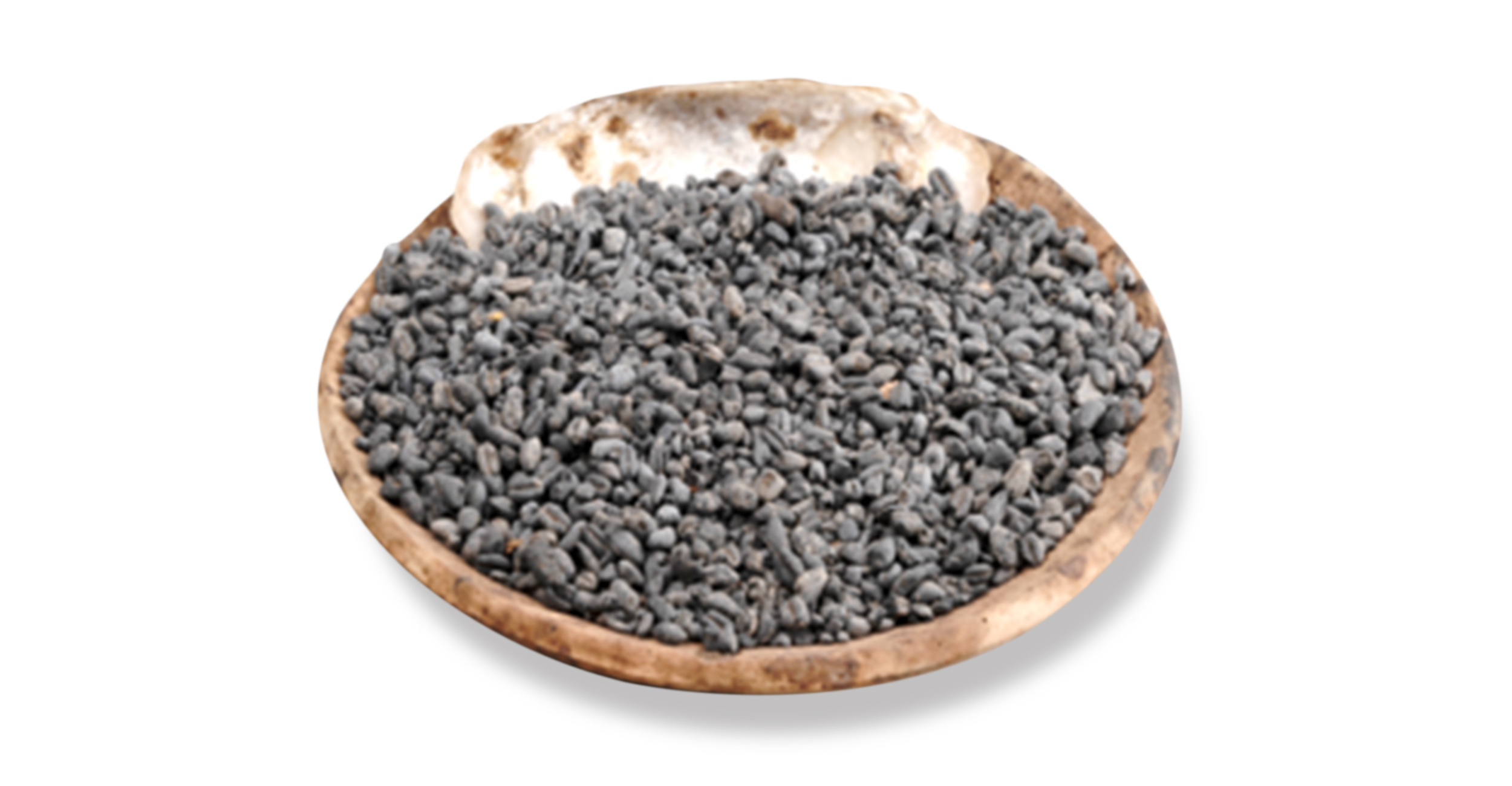
Charred grain (probably wheat)
A bowl of charred grains, probably wheat
Terracotta; food remains
2605 - 1900 BCE
North India
CSMVS
Details
Culture/Civilisation
Harappan Civilisation
Theme
Agriculture and Surplus
Subtheme
Surplus and the Road to City-States
Case Title
From Grain to bread
Display Location
Coomaraswamy Hall
Findspot
Mohenjodaro
Measurements
W. 12.7 Diamter. 2.8
Accession Number
IV 104
Description
Archaeobotanical studies, one of the most important investigative methods of plant remains from archaeological sites, is a significant tool in understanding crops, farming and eating habits of ancient people. Charred grains are often found in sites and when carbonised remains, such as the ones here, are subject to pyrolysis they result in interesting information.
Curators Comments
These grains were stored to feed the people of Mohenjodaro. Remains like these, discovered at archaeological sites from China to the Mediterranean, show that from around 8,000 years ago first millet, then wheat, barley, sorghum, and rice became the staple food for growing populations. After the cereal plants were harvested, they needed labour-intensive processes like threshing and grinding into flour before being baked into bread.