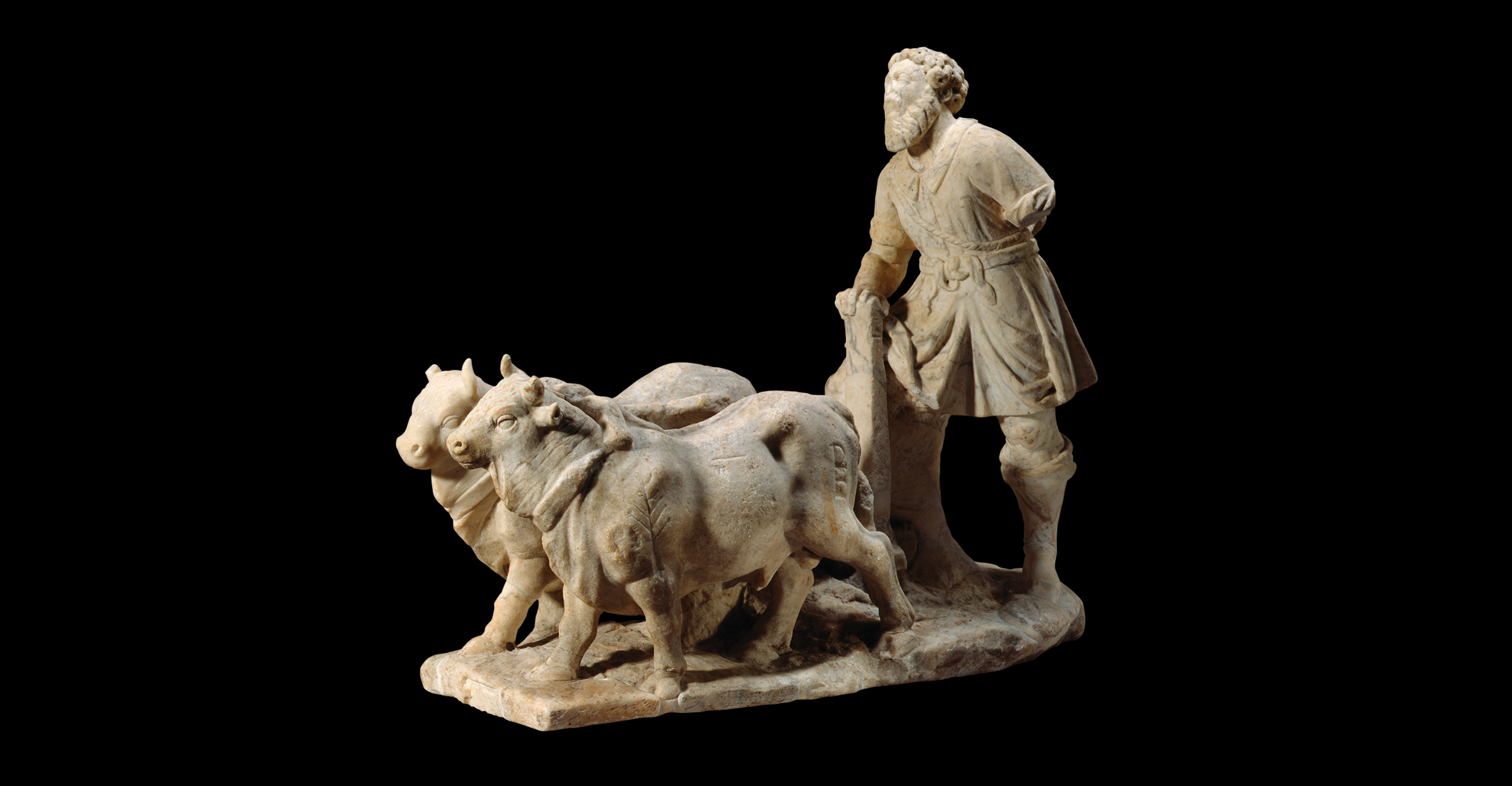
Roman ploughman (Romulus?)
Two cattle harnessed to the yoke of a plough, driven by a ploughman.
Loaned From: Antikensammlung, Staatliche Museen zu Berlin
Marble
circa 100-200 CE with parts reconstructed in the eighteenth and nineteenth centuries following its discovery
Rome, Italy
Antikensammlung, Staatliche Museen zu Berlin
Details
Culture/Civilisation
Ancient Rome
Theme
Agriculture and Surplus
Subtheme
Farming, Food and Surplus
Case Title
The Ploughing Revolution
Display Location
Coomaraswamy Hall
Measurements
53 x 60 x 23
Accession Number
SK 490
Description
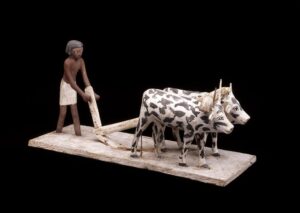
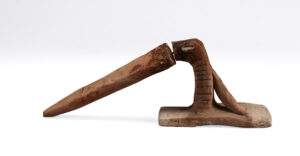
Thousands of years after the invention of plough and its widespread use, this Roman marble (3) shows that ploughing had become a symbol of the state. Legend holds that Romulus laid the foundation
of Rome by ploughing a furrow, thereby establishing the pomerium – the city’s sacred boundary. What lay within it was considered to be “Roman”. Whenever new lands were conquered, another ceremonial furrow was ploughed around Rome to mark their incorporation into the Empire.